2 Week Board & Train in Houston
Work toward easier walks and calmer greetings with daily training and hands-on owner guidance. Good Daweg's 2 Week Board & Train starts at $2,450 and includes two midway owner lessons and two refresher lessons after your dog returns home.
Your dog stays in a home training environment and practices everyday obedience. You learn the handling during the program so you can continue the work in your own routine.
Two weeks won't suit every dog or concern. Request a consultation to discuss your dog's starting point and whether this program matches your goals.
Dog Obedience for Everyday Manners
In shortLoose-leash walking, recall, calm greetings, and sit, down and stay.
The program focuses on skills you can use in ordinary routines:
- Loose-leash walking. Your dog moves with you instead of pulling toward the next smell or dragging you down the block.
- Recall. Returning when called, with practice conditions adjusted to your dog's current response.
- Greetings. Meeting people at the door or on a walk without jumping, mobbing, or excessive barking.
- Basic commands. Sit, down, and stay give your dog a specific response to offer instead of guessing what you want.
These skills connect to each other. A dog that walks well on leash is also easier to manage during a greeting, since you have more control of where they are and what they're doing. Tell us which of these matters most in your household so the stay has a clear starting point rather than a generic list of goals.
Practicing Obedience Around Distractions
In shortSkills are practiced around real distractions, added at your dog's pace.
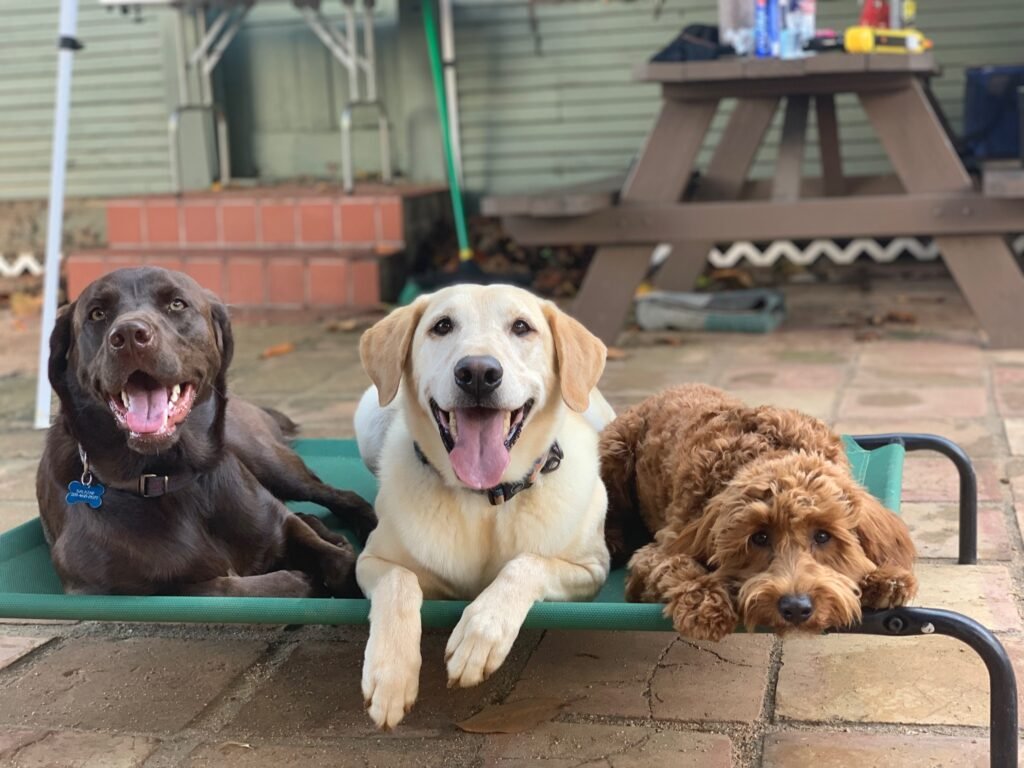
A cue that works in a quiet room and a cue that works with real distractions are two different levels of the same skill. Movement, other animals, unfamiliar people, and interesting smells all raise the difficulty of an exercise your dog may already know in an easier setting.
During the stay, obedience work is practiced with distractions introduced gradually, matched to what your dog can currently handle. That doesn't mean every dog is taken into every busy environment. Strong reactions to other dogs, resource guarding, or any bite history should be part of the conversation before booking, since those concerns need their own attention rather than general obedience practice.
Ask which distractions your dog has practiced around and what remains difficult. Keep early outings after pickup manageable rather than moving immediately into the busiest setting you hope to visit.
Two Midway Owner Lessons During Board & Train
In shortYou practice the handling with your trainer before your dog comes home.
The two midway one-on-one lessons let you see the work in progress and practice before pickup. Confirm the appointment arrangements before booking so you can set aside time to attend.
Use this time to watch the cues being used and try them yourself with guidance nearby. A demonstration makes more sense once you've handled the leash or given the command under supervision. If a cue looks different from what you expected, this is the moment to ask why, rather than working it out alone once your dog is home.
If more than one person in your household will handle your dog day to day, talk about how to include them. A cue means more when everyone gives it the same way and expects the same response, not just when everyone knows the same word.
Two Refresher Lessons to Continue Your Dog’s Training
In shortTwo lessons after pickup to work through anything that changes at home.
Two refresher lessons are included after your dog comes home. Coming home changes the setting: a familiar doorway, another pet, or a different daily schedule can all affect how a cue holds up, even when nothing about the training itself has changed.
These lessons are a chance to bring specific situations back to your trainer, rather than a general report that something "isn't working." Describe what you asked for, where you were, and what your dog actually did. That detail helps identify whether the issue is the environment, the timing of a reward, or how the cue is being given.
If a new concern develops, describe it before the next appointment. Ask whether the included follow-up can address it or whether a separate assessment or lesson would be more appropriate.
Leash Manners and Shared Walkways in Houston
In shortHouston requires leashes outside off-leash areas, so leash manners matter on every outing.
City of Houston park rules require leashes outside designated off-leash areas. Dogs must also be leashed when entering and leaving dog parks. Handling at a gate is therefore a useful skill even when the outing includes an off-leash area.
On a shared walkway, leave room to move away from passing people or bicycles rather than tightening the leash and forcing close contact. If your dog lunges or cannot settle, choose an easier setting and discuss that reaction with your trainer. Ordinary manners training shouldn't be assumed to resolve fear or aggression.
2 Week or 3 Week Board & Train?
In shortWant more practice time? The 3-week program starts at $3,465 and adds a lesson of each kind.
The three-week program starts at $3,465 and allows more obedience and public-space practice. It includes three midway lessons, three refresher lessons, a leash, and a place bed. Compare those inclusions with the two-week program's two midway and two refresher lessons.
The extra week may be useful when more practice and owner instruction fit the goal. It does not guarantee a harder problem will be resolved. Compare the programs and discuss your dog's behavior before selecting a duration.
If your dog needs strictly foundational work, the 10-day program may fit better, and more involved behavioral concerns are sometimes better served by the 4 to 6 week program. Price and length are useful starting points, not the whole decision. Call to talk through the right length.
Owner Lessons After Your Dog’s Training Stay
In shortFour habits that keep the training working once the lessons wrap up.
After pickup, use the same cues and handling you've practiced. Keep exercises manageable while your dog adjusts to your household's rooms, people, and distractions.
A few habits make ongoing practice more useful once the formal lessons wrap up:
- Reward what your dog actually likes. Food, a favorite toy, or a bit of play only works as a reward if your dog genuinely wants it.
- Reward at the right moment. A treat that arrives a few seconds late can reinforce the wrong behavior instead of the one you meant to reward.
- Keep cues consistent. If one person says "down" for lying down and another uses it to mean "off the couch," your dog has two different jobs to sort out.
- Know when to make it easier. If your dog is struggling, stepping back to an easier version of the exercise is more useful than repeating the same failed attempt.
If you want more structured, ongoing support beyond the included lessons, private lessons offer individual sessions or packages of five, eight, or twelve, with guidance for practicing between visits.
Meet Your Good Daweg Dog Trainers
In shortWesley Dawe, training dogs since about 2013, and associate trainer Anthony Mason.
Wesley Dawe began training dogs professionally around 2013 and founded Good Daweg in 2020, with a background in bird dogs. Associate trainer Anthony Mason is also part of the team. Ask who will work with your dog during the stay.
Our approach combines positive reinforcement with constructive training techniques, adjusted to the individual dog. E-collars are used when necessary. You're welcome to ask about the specific methods and equipment planned for your dog during your consultation, before the stay begins.
Two-Week Program FAQs
Can a dog be trained in two weeks?
Two weeks gives your dog a focused, daily training period, not a guarantee that every skill is permanently finished by pickup day. The program works on everyday manners, including leash walking, recall, and greetings, with practice introduced gradually around distractions. What's realistic for your dog depends on where they're starting from, which is worth talking through during a consultation.
Is a two-week board-and-train program worth it?
That depends on what you're comparing it to and what support you want alongside the training itself. Good Daweg's 2 Week Board & Train includes two midway owner lessons during the stay and two refresher lessons after your dog comes home, so you're not left to translate the training on your own. Weigh that owner support, not just the daily training, against other formats like private lessons when you're deciding what fits.
Is a two-week stay suitable for every dog?
No. Health, comfort being away from home, and existing behavior concerns all affect whether a two-week stay is a good fit. Tell us about any medication, past boarding experiences, and separation difficulties before booking. If a training stay away from home isn't the right setup for your dog, private lessons let you work with a trainer while your dog stays with you.
Discuss your dog's training stay
Tell us what you'd like to improve and any concerns about a stay away from home. We'll discuss suitability, owner lessons, and the next step before you commit.
Call (281) 900-2572 or request a consultation. Good Daweg serves Houston, The Heights, The Woodlands, Katy, and Spring.